
Learn how stormwater oil water separators work, which oil fractions they handle, and when a media filter or a combined system is the better choice. Sizing and maintenance notes are included.
Pick by the oil fraction on your site and by flow. If the oil is free and floating, the drainage area is about an acre or less of impervious cover, and you have room for a chamber, use an API or coalescing-plate separator. If the problem is emulsified or dissolved hydrocarbons, the research assigns those to a sorptive stage such as Smart Sponge® media, tested on your own water. Pair the two only when a site has both heavy free oil and an emulsified or dissolved fraction your permit measures.
Which option fits which site
A stormwater oil/water separator, also called a water quality inlet or oil/grit separator, is built for free oil and coarse solids. It settles sediment, traps floating oil and holds debris back. Emulsified and dissolved oil pass through the chamber. Separators suit small, high-risk impervious areas such as fueling pads, truck yards and wash areas, where free oil can arrive in volumes that would load a sorptive media quickly.
Smart Sponge® is a hydrophobic, oil-attracting, polymeric-based media that absorbs and retains hydrocarbons. It captures oil, grease and hydrocarbons that contribute to sheens. It needs far less space than a chamber, and passive formats run without power. Smart Sponge® AC targets dissolved hydrocarbons and organic compounds.
Use this rule to decide by fraction:
- Free oil: goes to a separator or hydrodynamic unit.
- Particulate-bound oil: goes to sediment and trash capture.
- Emulsified and dissolved hydrocarbons: go to a sorptive stage, tested on your own water.
Then let site conditions pick the format:
- Free oil, one acre or less of impervious cover, space for a chamber: a separator.
- Low to moderate, steady flow at a basin with no room for a tank: a passive insert.
- High or variable flow: a pumped format may be needed.
| Factor | Separator | Media filter | Separator plus media |
|---|---|---|---|
| Oil fraction treated | Free oil and coarse solids | Oil, grease and hydrocarbons (AC medium for dissolved) | Free oil upstream, remaining hydrocarbons downstream |
| Footprint | Chamber sized to the drainage area | Fits basins, vaults and vessels already in place | Chamber plus a media stage |
| Power | None for the chamber | None for passive formats; Smart Skid uses pumps | Depends on the media format |
| Drainage area | Generally one acre or less of impervious cover | Larger areas can use vaults | Separator limit applies to that stage |
| What remains | Emulsified and dissolved oil | Depends on chemistry, contact time and loading | Confirm by testing |
As an example configuration to test, take a fueling pad under one acre of impervious cover with free oil reaching the drain and a sheen concern at the outfall. A separator is the first stage for the free oil and coarse solids. A media stage downstream is the candidate for the hydrocarbons that pass through. Whether that pairing meets your limit depends on your water, so run it through column or pilot testing before you commit.
If you are unsure which fraction you have, a specialist can sample for it. Our guide on hiring a water treatment specialist to close a permit gap covers what that assessment should include.
How API and coalescing plate separators work
Gravity separation relies on buoyancy and Stokes' Law: an oil droplet rises faster as it gets larger. The API design basis targets free globules of about 150 microns (0.015 cm) and larger, which rise quickly enough to be skimmed within a practical detention time. Smaller droplets rise too slowly and pass through. Longer detention generally improves separation, so an undersized chamber performs poorly even when built correctly.
Coalescing plate units add inclined plates, often an oil-attracting material such as polypropylene. Small droplets meet the plates, merge into larger globules and rise off them. The added surface area lets the unit be much smaller than a plain gravity chamber, so plate units are the more common choice where space is limited.
For sizing, a conventional separator is generally limited to about one acre of impervious cover, used offline to treat the design water quality flow. Larger areas usually need a different approach.
Maintenance is part of the design. Sediment left in the chamber can re-suspend and become a source of pollutants, and cleanout is often neglected because the unit is out of sight, per the Connecticut manual. King County's oil/water separator information sheet adds that absorbent pads should be replaced as needed, including in the fall before the wet season and again in spring.
Verify any separator against the design manual or approval list that governs your site. King County's water quality chapter, for example, sets design details for coalescing-plate separators and approval requirements for proprietary facilities.
Flow decides the format of whatever follows the separator. Our page on how to choose a heavy metal water filtration system lays out how low steady flow suits a passive insert and high or variable flow, such as washdowns or intense storms, suits a pumped system. The same flow logic applies to a hydrocarbon media stage.
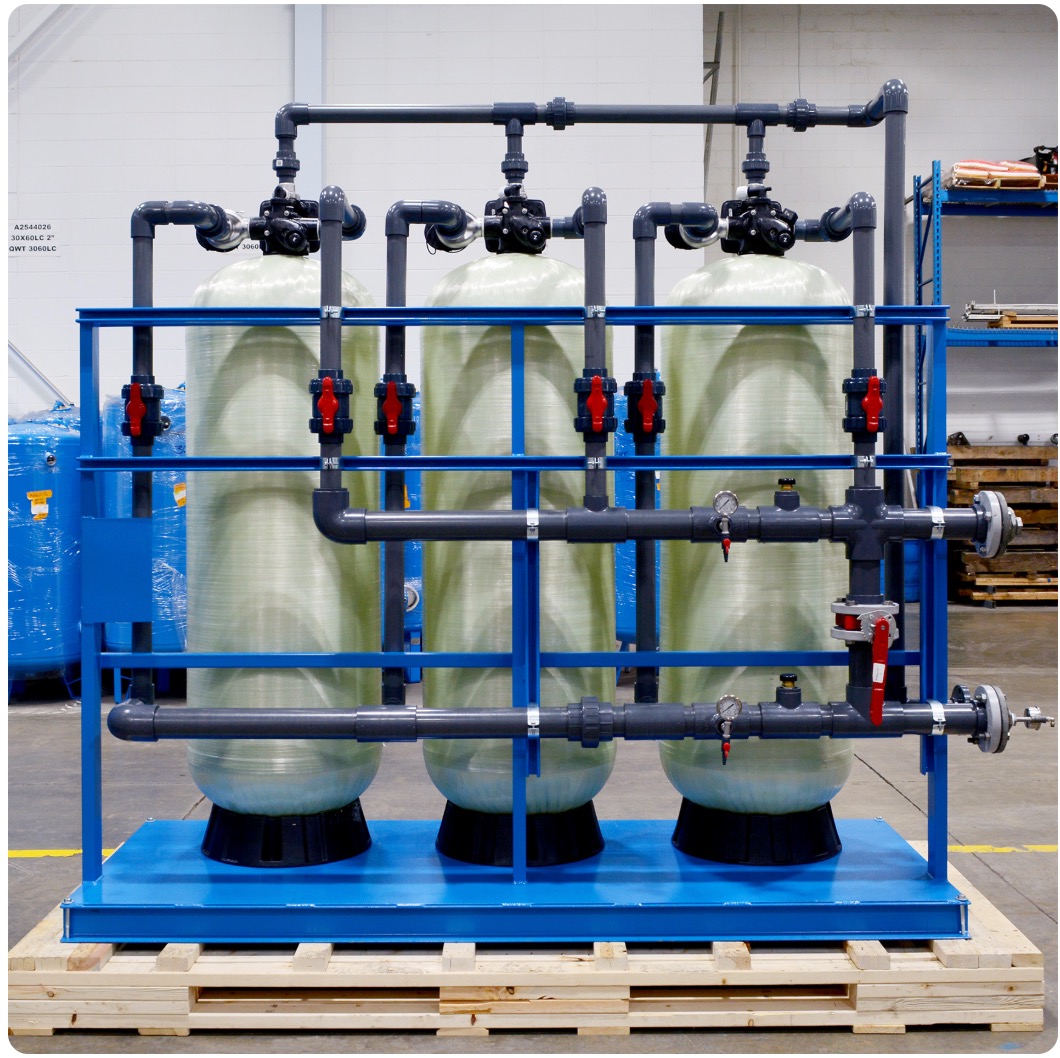
How a hydrophobic media filter removes oil, and where it stops
Water passes through the media with minimal driving pressure, and hydrocarbons absorb into the media and are retained. Standard Smart Sponge® targets oil, grease and hydrocarbons; other pollutants need a different medium.
Where flow is low to moderate and steady and a basin has no room for a tank, an Ultra Urban® Filter insert holds the media. It retrofits an existing basin without excavation, pumps or power. For larger drainage areas, the media can go in vaults or other treatment structures. High or variable flow can call for a pumped Smart Skid, which uses pumps, pressure and flow controls.
The limits depend on your water chemistry, contact time and loading. Spent media is a waste stream, so confirm its disposal classification with your waste hauler and local solid waste rules, and include hauling and replacement in the budget. Plan replacement from your own data: track influent, sample effluent on a regular schedule, and replace media when effluent trends toward your limit. Final compliance depends on your complete stormwater program: design, operation, monitoring and permit requirements.
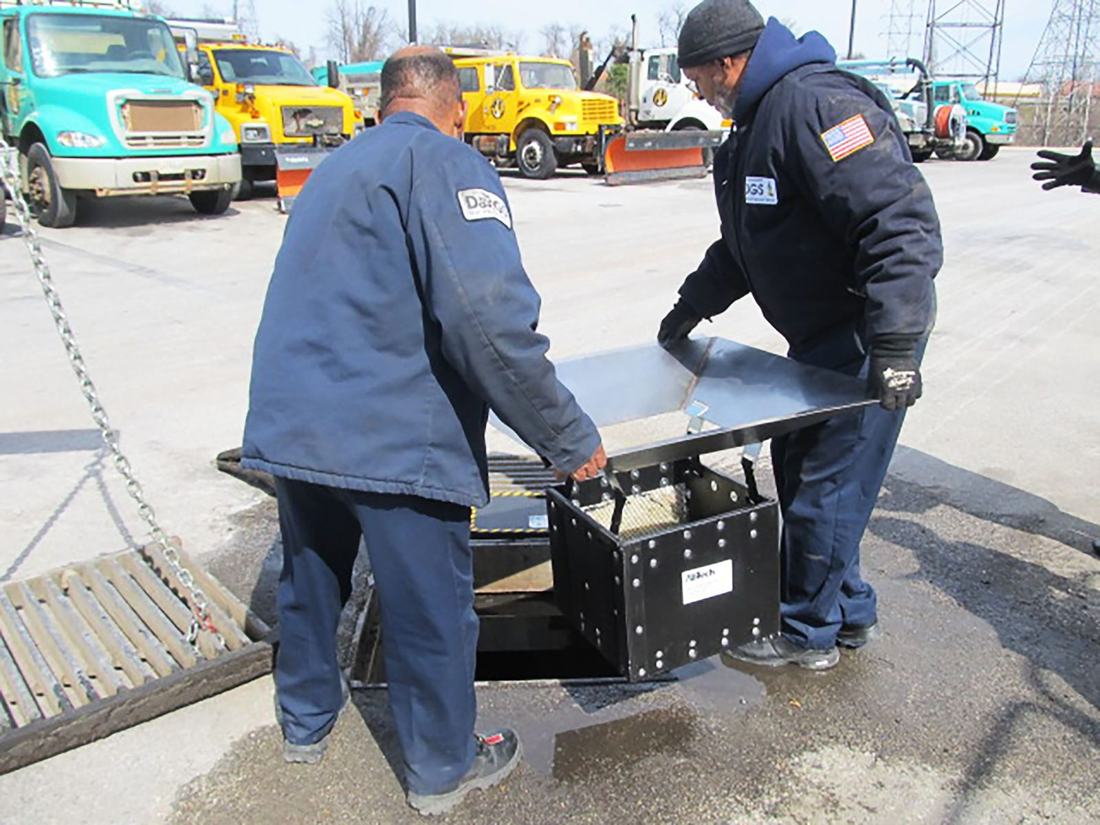
What each can meet
A separator addresses free oil and coarse solids. It is ineffective on soluble pollutants and fine particles. Emulsified and dissolved hydrocarbons need a sorptive stage. We do not state removal rates, so confirm against your permit with testing on your own water. We run your water through the media in our Phoenix lab, then pilot it on site when it makes sense.
When a separator alone is the wrong choice
Skip separator-only treatment when your limit or sheen problem involves emulsified or dissolved oil, or when you cannot fit a tank. Media alone is the wrong choice where heavy free oil and sludge would load it quickly, because a separator upstream should take that fraction first. A site assessment reviews contaminants, flows, space, effluent targets and access, and you can contact us to schedule one.