
Compare precipitation and adsorption media for dissolved metals, learn why sediment controls miss them, and see how flow, spent media and column testing shape the choice.
Heavy metal water filtration systems for industrial stormwater and wastewater need a step that binds ions in solution, such as adsorption media or chemical precipitation. Sediment controls capture only particulate-bound metals. Validate any choice with column testing on your own water before you install at full scale.
Which technologies remove dissolved heavy metals?
Chemical precipitation turns dissolved metal ions into insoluble solids, usually followed by settling or filtration. A review of industrial removal technologies calls it widely used, relatively simple to operate and cost-effective. A separate global review of wastewater technologies notes that high-efficiency methods, including adsorption, membrane filtration and electrochemical processes, can bring large volumes of toxic sludge, membrane fouling and high operating costs.
Hydroxide precipitation depends on pH, because metal hydroxide solubility changes with pH. Each metal has its own best range, so a mixed-metal stream is harder to treat by precipitation alone.
Adsorption media hold dissolved metals at the media surface. Smart Sponge® HM is a polymeric-based media selected for dissolved-metal and phosphorus treatment, targeting zinc, copper, lead, arsenic and selenium. Spent media still needs disposal planning.
A practical rule: use precipitation for concentrated process wastewater, where chemical handling is already in place. Use adsorption media for runoff and for polishing after a primary step. For help matching media to permit requirements, see how to choose stormwater filtration media.

Why do sediment controls miss dissolved metals?
Sediment and TSS controls remove particles, and particulate-bound metals leave with them. Dissolved ions stay in the water and pass through basins, socks and sweeping programs. A clean TSS result does not rule out a metals exceedance.
Research supports this. One study of highway vegetated filter strips with compost blankets found particulates and particulate-bound metals largely removed, while dissolved copper leached in the field. A study of urban stormwater biofilters found dissolved constituents were not effectively retained.
To check your own site, compare total and dissolved metal results on the same lab report. If dissolved metals make up much of the total, sediment BMPs alone will not close the gap. Flow also matters for the next choice; see passive versus pumped filtration.
What site factors decide the filtration format?
Flow rate and available infrastructure decide the format. Water chemistry, pH, contact time and competing contaminants decide whether the media does the job.
Use these decision rules:
- Low to moderate, steady flow at a few drains: a passive catch basin insert such as the Ultra Urban® Filter runs without power and retrofits an existing basin.
- Vessels, tanks or vaults already on site: bulk Smart Sponge® media can be loaded into them.
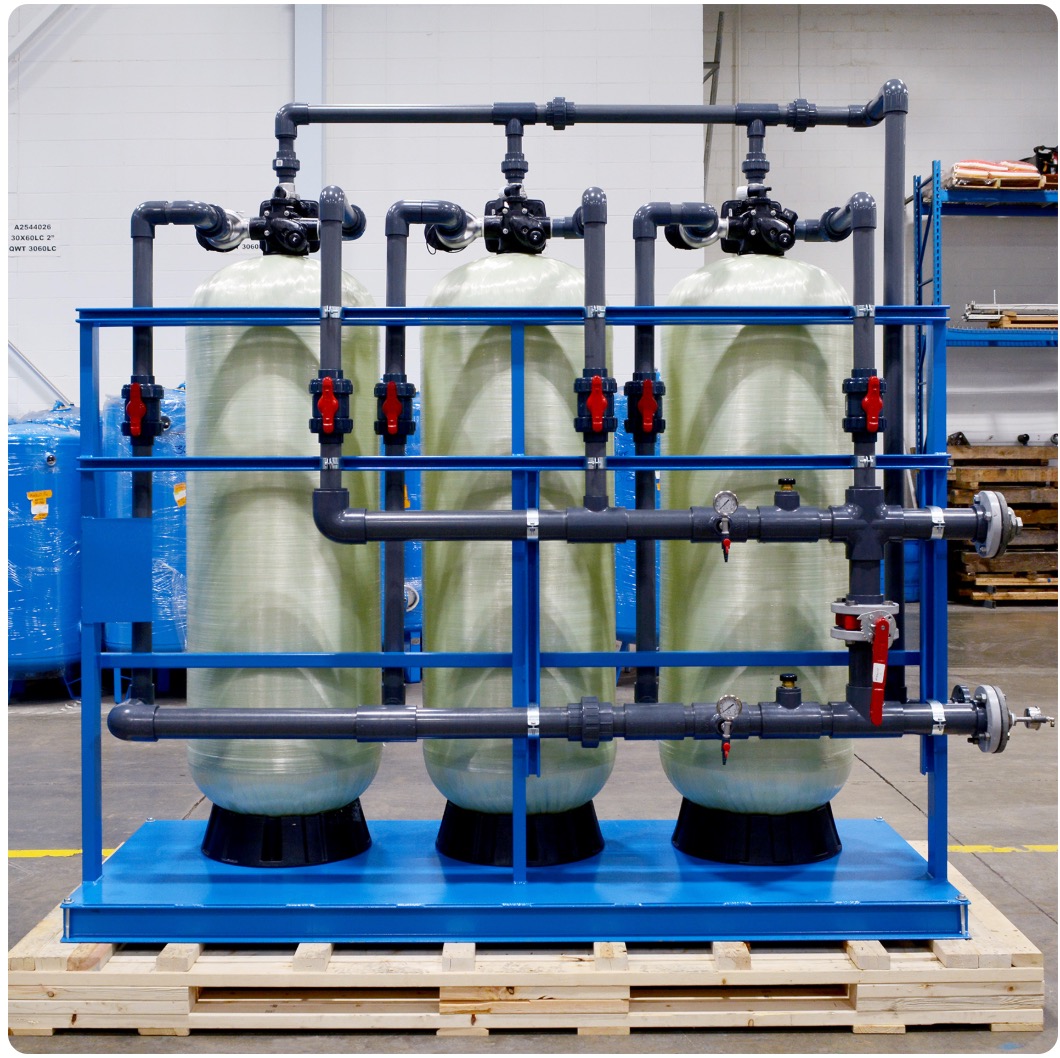
- High or variable flow, such as washdowns or intense storms: a pumped Smart Skid system, with pumps, pressure and flow controls, fits better.
- pH and competing contaminants: both change how metals behave. A lab study of bioretention filter materials found adsorption behavior changed as metal solutions became more complex, so test mixed streams rather than assume single-metal behavior.
The same study found about 90% of adsorption occurred within 1 hour for those bioretention materials, which shows why contact time belongs in the design. It is not a Smart Sponge® result.
How are media lifespan and spent media handled?
Lifespan depends on metal loading and water chemistry, so there is no universal replacement interval. Plan replacement from your influent data: track influent concentrations, sample effluent on a regular schedule, and replace media when effluent trends toward your limit.
Spent media is a waste stream. Confirm its disposal classification with your waste hauler and local solid waste rules before you commit. Include hauling and replacement in the budget.
How should you validate a system before full-scale installation?
Start with laboratory column testing on a sample of your own water. A column test passes your water through the candidate media and measures effluent dissolved metals against your target, which also gives data for estimating media life. Larger projects can follow with a pilot, sampling influent and effluent at the same time.
Frequently asked questions
Can one system treat metals and oil together?
Yes. Media types can be combined in one system, for example Smart Sponge® HM for dissolved metals alongside standard Smart Sponge® media for hydrocarbons. This suits sites with both metal fines and oily runoff.
Does a dissolved metals filter replace sediment controls?
No. Sediment controls still remove particles and the metals attached to them. A dissolved-metal step addresses what they leave behind.
Where do I start?
Begin with a site assessment covering contaminants, flows, space, effluent targets and maintenance access. To match media and format to your water, schedule a site assessment with Abtech.