
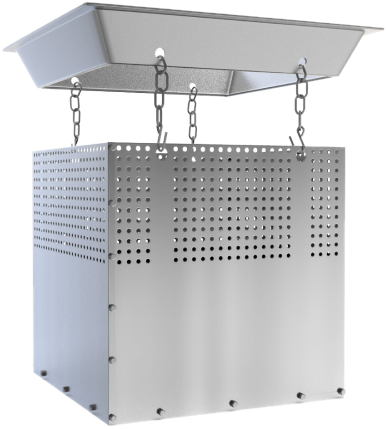
Catch basins, explained.
What a catch basin is, what washes into it, and how a filter insert cleans the water on its way through. No digging, no power, no pumps.
The drain at the curb is a catch basin.
A catch basin is the concrete box under a street grate or curb opening. Rain falls in, heavy grit settles to the bottom, and the water leaves through a pipe. In most places that pipe runs to a creek, river or bay with no treatment on the way.
Whatever the rain picks up rides along: oil and fuel from parked cars, zinc and copper from tires and brakes, grit, litter, leaves, fertilizer and bacteria.
- Drop inletA grate set flat in the pavement. Water drops straight in.
- Curb openingA slot in the face of the curb. Water runs along the gutter and in through the side.

Follow the rain through a storm drain filter.
Most of our filters drop into storm drains that already exist. No digging, no power, no pumps. Tap a step to see that part of the filter.
What a filter keeps out of the water.
Numbers from our own project records.
Catch basin filters, coast to coast.
Every pin is a site with Ultra-Urban® Filters. Tap a pin to see what it treats.

Selected recent projects.
What happens inside the sponge
Zoom in from a bed of real Smart Sponge to the surface where contaminants are caught. Pick a contaminant.
 Dirty water in ↓Clean water out ↓
A bed of Smart Sponge granules leaves wide channels, so water moves through quickly: high loading rates, up to 80 gpm/ft², with minimal driving pressure (1–3 psi).
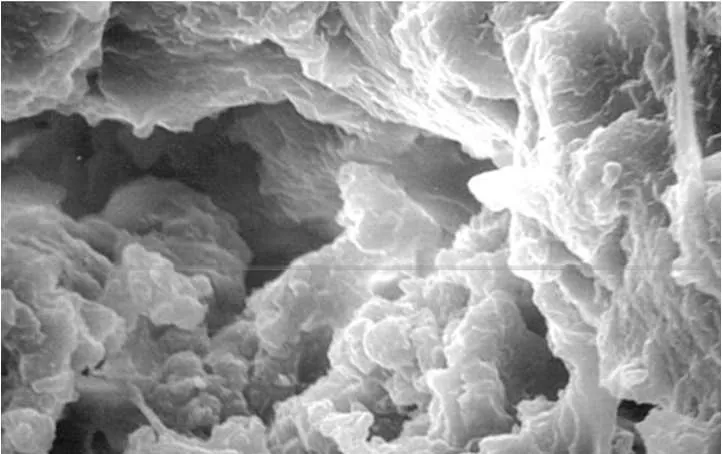
At 1,000× the polymeric-based media is a maze of pores. Water flows through while oil absorbs to an enormous surface.
The media repels water but draws oil in. Hydrocarbons absorb into the media itself and are retained. Spent media has passed the EPA leach test (TCLP).
Source: Smart Sponge® technical data sheet and 2025 media brochure, Abtech Industries.


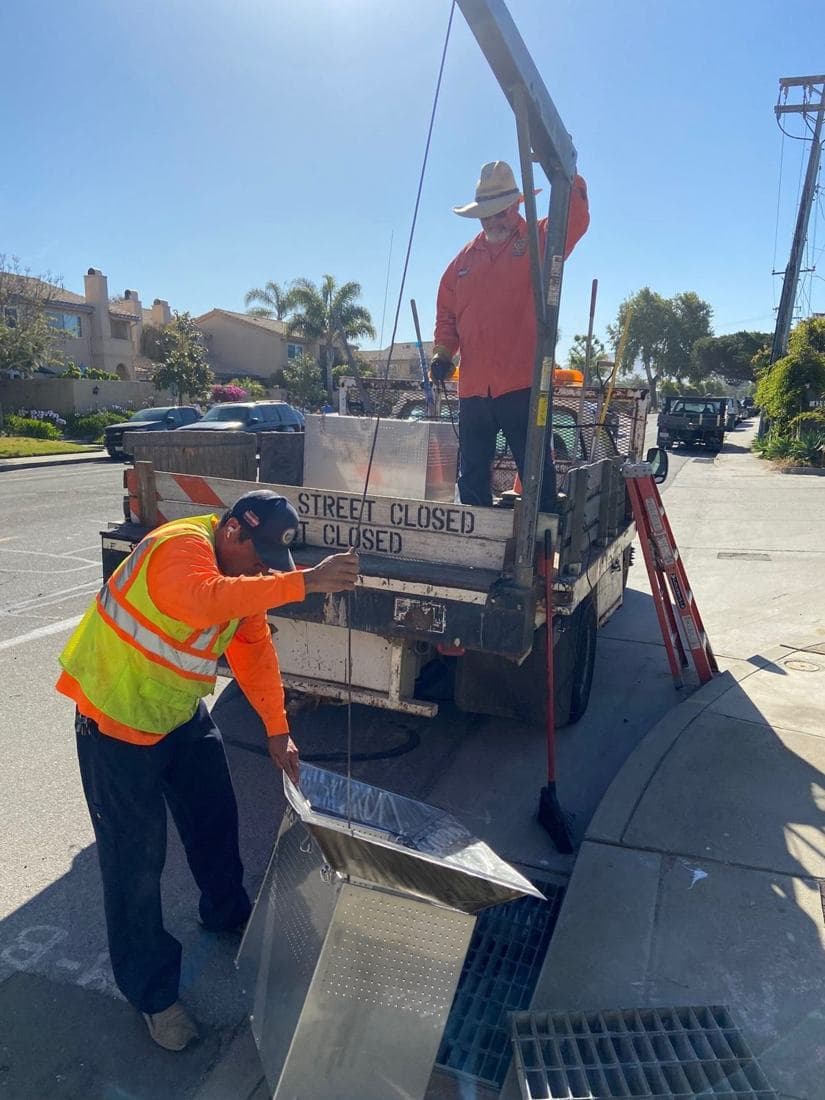
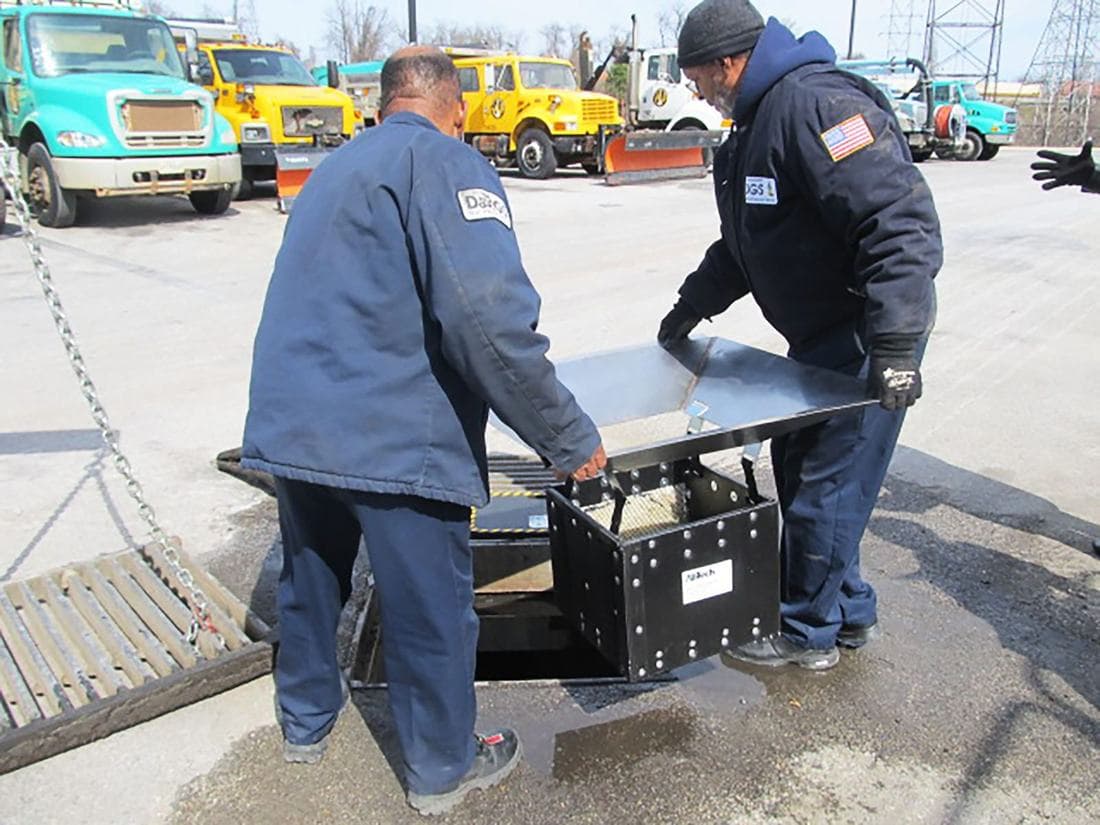
Serviced from the street.
Crews check and clean the filter from the surface. Nobody has to climb into the basin.
- How oftenIn the first year, check it every quarter, at the start and end of the rainy season, and after big storms. After that, at least twice a year.
- CleaningLift the grate and clear the box by hand or with a vacuum truck.
- When to change the spongeWhen it is dark from top to bottom, or weighs about twice what it did new. A 14 × 14 inch deep-box filter goes from 21 lb new to about 36 lb when spent.
- DisposalSpent sponge passes the EPA leach test (TCLP) and goes to a landfill, waste-to-energy plant or cement kiln as ordinary solid waste.
Proof you can put in a spec.
Every claim links to the public record.
Questions about catch basins
More about catch basins
The basics
- Drop Inlet vs Catch Basin: Differences, Filters and Treatment
- What Is a Catch Basin Insert Filter, and How Do You Choose the Right One?
- Catch Basin Insert Filter for Stormwater: How Ultra Urban® Filter and Smart Sponge® Media Work Together
- Stormwater Pit and Catch Basin: What to Check Before Adding a Filter Insert
Choosing and retrofitting
By pollutant
- Catch Basin Inserts That Stop Hydrocarbons Before They Reach the Outfall
- Catch Basin Inserts and Curb Inlet Filters for Heavy Metals
- Phosphorus Removal in a Catch Basin: Smart Sponge® HM Inserts
- E. coli Removal from Stormwater: A Permit Holder's Guide
- Metal Recycling Facility Stormwater Treatment: Zinc, Copper, and Lead Reduction at the Catch Basin