
Learn which storm drain filters trap coarse sediment, how to check removal claims, and what drainage area, bypass and cleaning limits decide whether a filter works. Includes a comparison of inserts and barriers.
For coarse sediment, framed fabric-bag inserts and custom-fit catch basin inserts with a high-flow bypass work, as do external block-and-gravel or stone barriers, provided the inlet drains a small area and the device is cleaned often. For finer particles, ask for TSS removal verified by an independent program or credited by a state.
Block-and-gravel, gravel-and-mesh, excavated drop and fabric barriers are temporary construction-site protection, used until the ground is stabilized. A permanent drain uses a post-construction insert. For a permanent drain, check your own permit or local manual for drainage-area and cleaning limits.
Should I use an insert or a barrier around the grate?
Internal devices sit inside the inlet. A framed insert has a rigid frame and a fabric bag hung below the grate, and it is a step up from older fabric-only designs, with easier installation, better trapping and less maintenance. Custom-fit inserts are fabricated to a basin's geometry, and inserts are generally only useful for larger sediment. Most of our filters drop into storm drains that already exist, with no digging, no power and no pumps, and our Ultra Urban® Filter and Smart Sponge® media follow that approach.
External barriers of block and gravel, stone or fabric pond water around the grate so particles settle before the water enters.
| Device | Where it fits | Heavy flows | Ponding or overflow | Cautions |
|---|---|---|---|---|
| Catch basin filter (insert) | Paved or earthen | Needs a non-clogging high-flow bypass | Bypass carries overflow | Frequent maintenance required |
| Gravel and mesh filter | Paved only; withstands traffic | Suits heavy concentrated flows | Ponds; no overflow provided | Prone to plugging |
| Block and gravel drop filter | Paved or earthen | Suits heavy concentrated flows | Will not pond | Prone to plugging |
| Excavated drop inlet protection | Sheet flow on small drainage areas | Suits high flow where overflow is likely | Basin around the inlet with drainage openings for dewatering | Prone to plugging |
| Fabric barrier (silt fence, geotextile) | Smaller, flatter drainage areas | Not suited to heavy flow | Ponds water around the inlet | High failure rate in some locations |
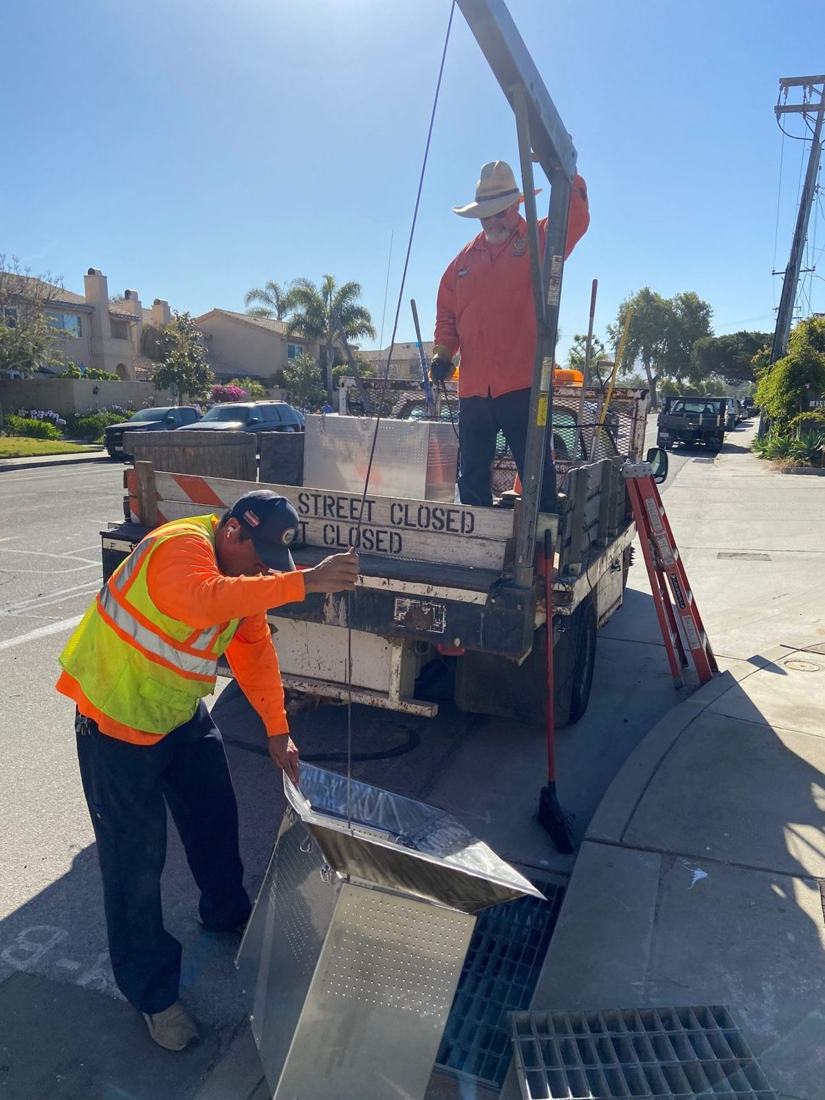
How much sediment do catch basin inserts really remove?
It varies by device and manufacturer. Pennsylvania lists our Ultra Urban® Filter as an approved stormwater practice. New Jersey shows how verification works: major development must remove 80% of TSS, and a manufactured treatment device counts toward that only when NJCAT verifies its removal rate and NJDEP certifies it.
An "up to 80%" claim in trade press, with no named test protocol, is a different thing from either a regulatory target or a state credit. A state DOT evaluation of roadside catch basin inserts (listed in the National Transportation Library), with field and laboratory testing, found that no unit met both its sediment-removal and installation criteria. Ask any vendor for the verification report and the test conditions behind a number. For how inserts compare with built-in alternatives, see our comparison of cast-in-place filters and catch basin inserts.
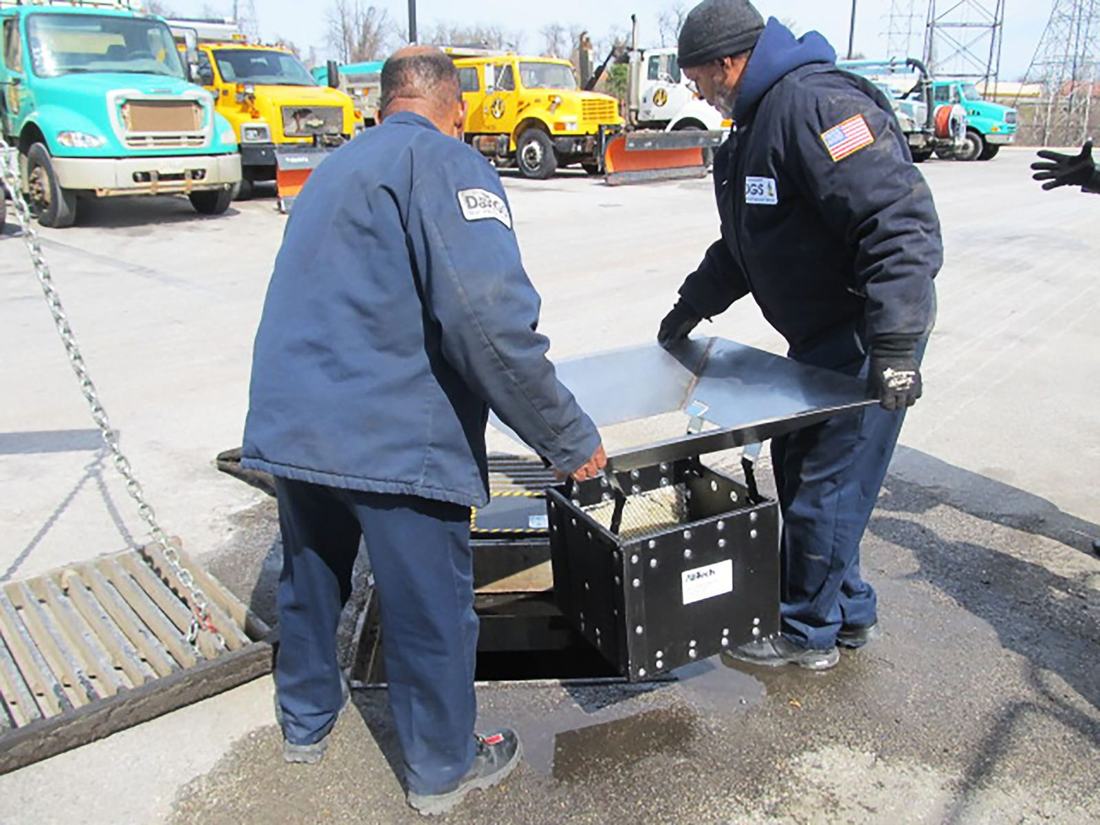
What decides whether a sediment filter works in my drain?
Particle size, peak flow, drainage area and bypass decide it. Inlet protection is ineffective for small particles and during large storms. For construction-site use, EPA's guidance keeps the drainage area to about 1 acre or less per inlet.
Dane County's manual sizes inlet protection to pass the 10-year, 24-hour storm. Tacoma's manual asks inserts for at least 5 cubic feet of storage and a high-flow bypass that will not clog under ordinary use. Without a bypass, a plugged filter forces water to back up at the grate.
How often do storm drain sediment filters need cleaning?
Under Dane County's construction-site rules, inspect and repair inlet protection after each rainfall, and remove accumulated sediment once it reaches half the original design depth. Inserts have limited storage, so under heavy sediment loads maintenance may be daily.
When is a vault or structural device better than an insert?
Move beyond an insert when the drainage area to one inlet exceeds that limit, when heavy sediment loads would mean emptying the insert as often as daily, or when flows are heavy and concentrated and a bypass cannot be trusted to stay open. If the water also carries oil or dissolved metals, we can deploy Smart Sponge® media in vaults or other treatment structures to treat higher flows before discharge.
If your permit concern is dissolved pollutants rather than sediment, our page on choosing stormwater filtration media covers that. To size this for your own drain, send us your flows and drainage areas for a site assessment.