
This article compares cast-in-place stormwater vaults with catch basin inserts on space, timing, treatment limits, cost scope and maintenance. It helps you decide which format fits a new build versus a retrofit.
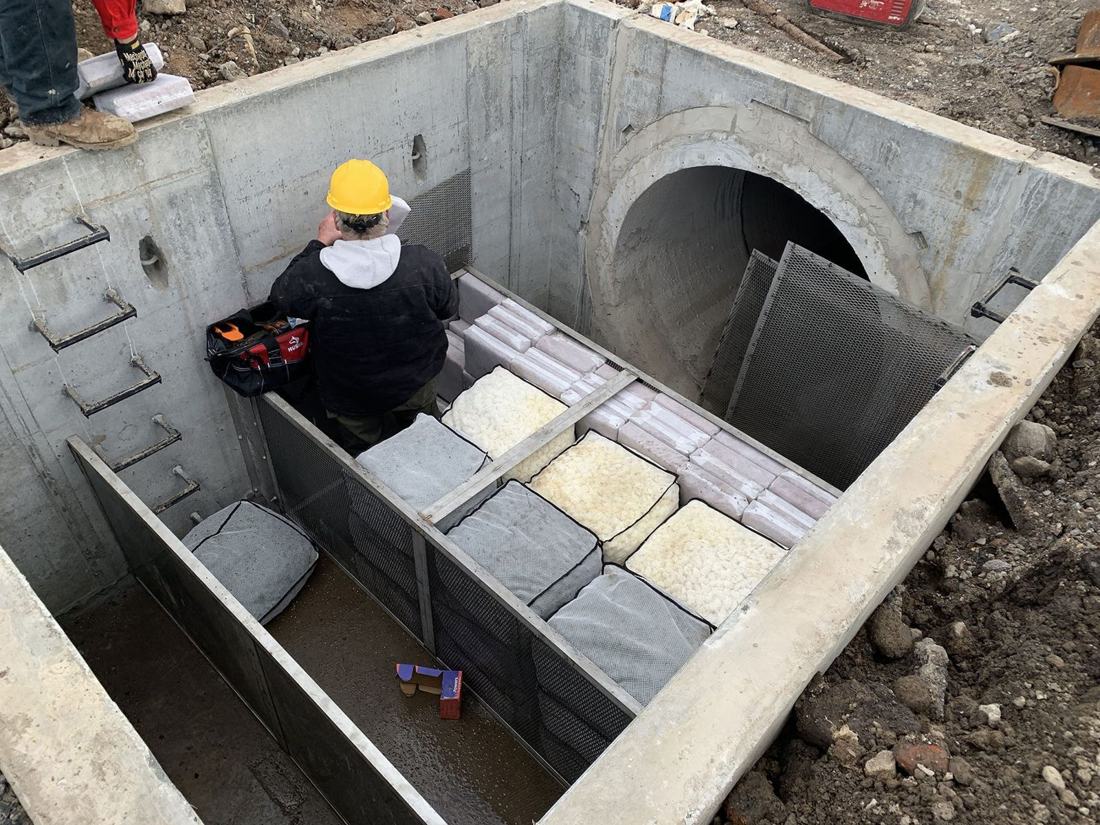
A cast-in-place stormwater filter is a vault built into the drainage path, usually poured or set as part of the structure. It holds filter media, and runoff passes through that media as it flows toward the outlet. Because the vault is part of the site's underground infrastructure, the decision to use one is made early, during design or a major rebuild.
Two things decide whether a built-in vault makes sense: space and timing. The vault needs room for excavation, a footprint sized to the drainage area, and access for the crew that will service it. If the site is already paved and built out, that room may not exist without tearing up surfaces that are already in use.
Construction timing matters for the same reason. A cast-in-place unit is easiest to specify when the drainage system is being designed or replaced, since the vault becomes part of the pipe layout. Retrofitting an existing system with one is possible, but it usually means more disruption than dropping a filter into a basin that is already there.
For guidance on matching media to a site before choosing a structure, see Passive Stormwater Treatment Retrofit: How Do You Match Filter Media to Your Site?
What Is a Catch Basin Insert Filter, and What Are Its Limits?
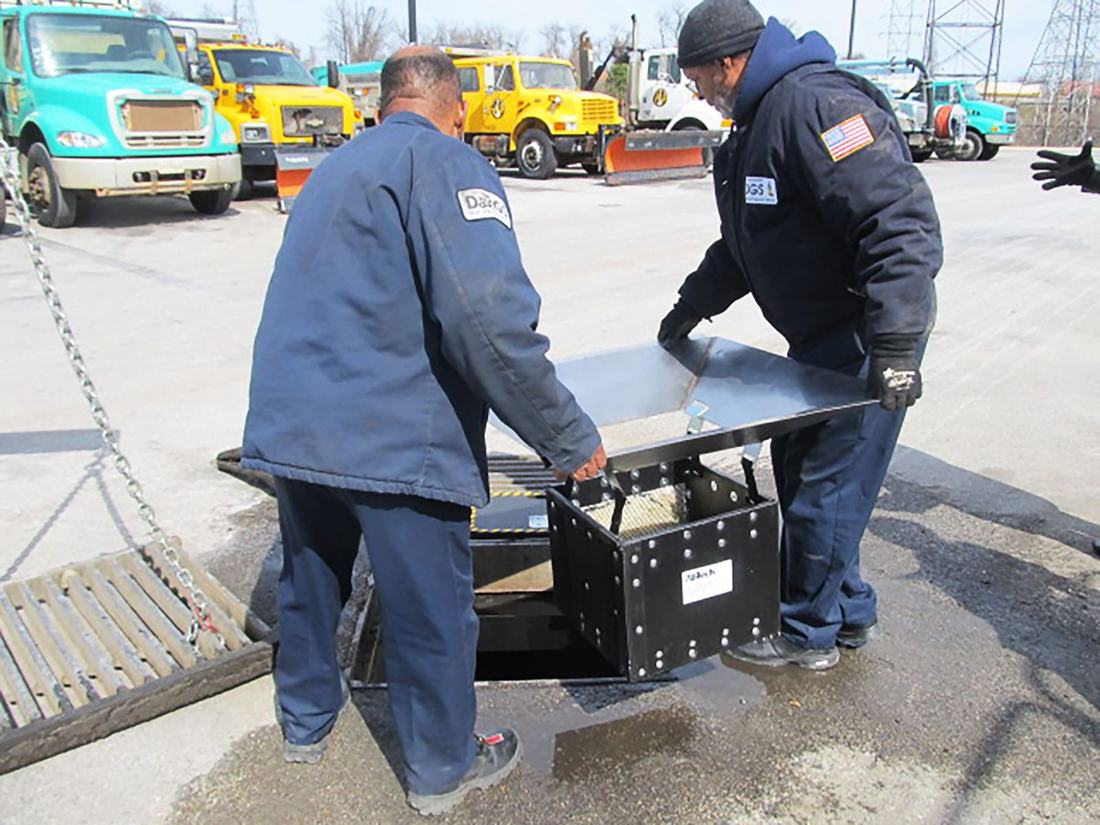
A catch basin insert is a removable tray or filter that sits inside an existing storm drain basin. Some units drop directly into the basin, while others require some retrofit construction. Inserts typically combine a structure that holds the media, such as a screened box or tray, with a filter medium like sand, carbon or fabric.
The main limit is volume. Because an insert is small, water spends little time in contact with the media, and the unit fills and needs attention faster than a larger structure would. EPA guidance notes that inserts have variable and limited effectiveness on fine, soluble pollutants such as nutrients, metals and bacteria. The Connecticut manual adds that, given their small volume, inserts have very limited retention times and require frequent cleaning or replacement to work.
King County's stormwater manual describes catch basin inserts as capturing coarse sediment, oil and grease, and litter, with some units able to address dissolved or fine-sediment pollutants. Whether a particular insert does that depends on its design, so the pollutants it targets should be confirmed before a basin is fitted.
To see how one insert design is built and what media it carries, read Catch Basin Insert Filter for Stormwater: How Ultra Urban® Filter and Smart Sponge® Media Work Together.
How Do the Two Compare on Treatment, Flow and Pollutant Removal?
Vaults generally handle larger flows and give media more contact time than inserts do. An insert holds only a small volume of media, so it treats whatever dissolved fraction passes through that volume during a storm. A vault can be sized to the drainage area, which is why the two formats suit different sites.
The BayFilter vault design shows what a larger, built-in filter can offer. Titan Environmental reports that its BayFilter system removes more than 80% of total suspended solids and 65% of turbidity, and that enhanced media can remove 65% of the overall phosphorus load. These figures come from the manufacturer and apply to that product's configuration, so they describe one vault design rather than vaults in general.
Insert performance is harder to pin to a single number. An insert suits coarse sediment, debris and oil at a small inlet. Dissolved metals or nutrients over a large drainage area usually call for a larger structure.
How Do Installation Cost and Space Needs Differ for New Builds and Retrofits?
Vaults need excavation and generally suit new construction, since the structure has to be built into the drainage path. A drop-in insert goes into an existing basin without digging, pumps or external power. That difference usually decides which route is practical on a site that is already built out.
Space is the other factor. A cast-in-place vault needs a footprint and room to work during construction, which may not exist beside a finished parking lot or street. An insert needs only the basin that already exists, so it adds little to the site's footprint. The Ultra Urban® Filter, for example, is custom-fabricated to fit the basin it goes into.
Cost figures depend on the site, the structure and the local labor market, and I have no verified price for either format to give here. The reliable comparison is scope: a vault adds excavation and construction work, while an insert adds the unit and the service visits it needs.
How Do Maintenance and Media Replacement Differ?
Inserts need frequent cleaning or replacement, while vaults need planned access for media changeouts and inspection. The small volume that limits an insert's treatment also makes it fill quickly, so the crew has to return on a short cycle. A vault holds more media and sediment, but the crew still needs a safe way to open it and remove spent material.
The King County manual warns that catch basin inserts need maintenance at set intervals and can become a pollutant source if neglected. Setting a cleaning schedule based on the site's runoff is therefore part of the design, not an afterthought.
Access planning matters for both formats. Inserts are usually serviced from the surface by lifting the grate, while a vault may involve a confined-space entry, a lid that needs a lifting device, and a vactor truck for heavy sediment loads. Confirm access and the maintenance interval before choosing either format, since a filter that cannot be serviced on schedule stops working.
What Should a Filter Have Before It Is Relied On for Permit Compliance?
Before a site depends on a filter for permit compliance, the product should have third-party verification and state or regional approval for the specific configuration you plan to install. Approval for one model or basin size does not carry over to another. Ask the supplier which configuration each approval covers and get the documentation in writing.
The Ultra Urban® Filter is a catch basin insert, custom-fabricated to each basin's geometry, that retrofits existing basins without excavation, pumps or power. Third-party-verified performance is available for qualifying configurations. Those approvals apply to the named configurations, so match them to your basin and your permit before counting on them.
For the next step, request a site assessment to match media and format to your site.