
A Smart Pak is a media insert that sits in a stormwater vault, channel or outfall and treats water as it passes through the media. This explains what it removes, how it is installed, and how often it needs replacing.
A Smart Pak is a media insert that sits in a stormwater vault, channel or outfall and holds filtration media in the water path. The media does the treatment. Results depend on your water, so match the media to the contaminant you need to remove.
What is a Smart Pak media insert?
A Smart Pak is a physical holder for filtration media. It sits inside an existing structure so that stormwater passes through the media before it leaves the site. The insert is what you install and later swap out, while the media inside is what removes pollutants.
Because the insert holds the media rather than treating water on its own, the media choice matters as much as the insert choice. A Smart Pak can carry different Smart Sponge media depending on the contaminant. Check the structure's layout before you order, because a layout that suits one medium may not suit another.
Smart Pak inserts work in vaults and channels, which are often the easiest places to add treatment to infrastructure you already have. For the catch basin version of this format, see how Ultra Urban Filter and Smart Sponge media work together.
Which contaminants can a Smart Pak remove?
The media decides the contaminant. Smart Sponge comes in several types, and each targets a different class of pollutant: hydrocarbons such as oil and grease, dissolved metals and phosphorus, bacteria, organic carbon, or PFAS. Pick the medium that matches the pollutant in your water.
Hydrocarbon media is hydrophobic, so it attracts and holds oil, grease and fuel. The metals and phosphorus medium targets dissolved fractions that sediment controls often miss. Antimicrobial media is described for E. coli and coliform bacteria, not for every bacterial indicator, so confirm the indicator your permit measures before choosing it.
A hydrocarbon medium does not remove metals, and a metals medium does not remove bacteria.
For how phosphorus-targeting media are placed in a catch basin, see phosphorus removal in a catch basin with Smart Sponge HM inserts.
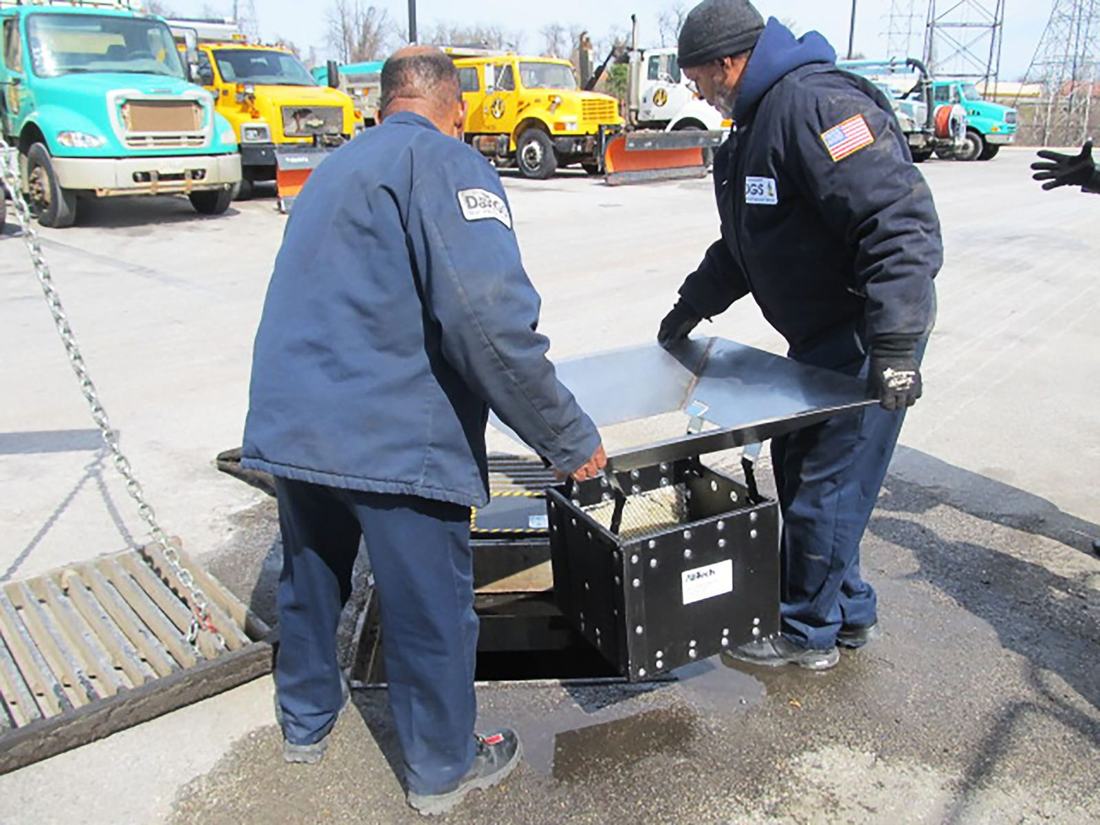
How is a media insert installed in an existing vault?
Smart Sponge media can be placed in existing vaults, catch basins and vessels without new excavation, pumps or power. Passive formats run on the water's own flow, so the work is mostly fitting the media into the structure that is already there.
Check four things against your vault before ordering: contaminants, flow, available space, and access for later service. Available space and crew access matter most, because the insert has to sit in the water path without blocking flow and be reachable when it needs swapping. For a practical checklist of site checks and installation steps, see how to install a stormwater BMP.
For larger applications, laboratory column testing on a sample of your own water, followed by pilot testing, shows whether the media removes your pollutant at your flow before you commit to a full installation.
How often does a media insert need replacing?
Saturation drives replacement. Once the media has absorbed as much as it can, it needs swapping. The WaterWorld report on Smart Sponge filter units states that filters can be replaced when they reach saturation, and gives a replacement time frame of one to four years depending on whether the location is residential, commercial or industrial. That figure covers Smart Sponge filter units generally, not Smart Pak inserts specifically, so confirm the timing for your structure during a site assessment.
Inspect the insert on a regular schedule and record what you find, so you can see the real loading rate at your site and adjust the plan.
When an insert is spent, it is swapped out and disposed of as a solid. Budget for that disposal step along with the replacement media.
Frequently asked questions
Can one Smart Pak treat several pollutants?
Yes, if the site carries more than one class of pollutant, several media can be combined in one system. Each medium does a different job, so list every pollutant in your water before choosing the media mix.
Does a Smart Pak need power or pumps?
Passive formats such as the Ultra Urban Filter run without power. Smart Pak inserts sit in the water's own flow, so no pumps are needed for the insert itself.
Next step
To match media and format to your water and site, schedule a site assessment with Abtech Industries.