
Learn how NPDES permits set phosphorus limits through technology-based and water quality-based routes, how orthophosphate is measured, and which treatment options remove it from a discharge.
An NPDES permit controls phosphorus through technology-based effluent limits, or through stricter water quality-based effluent limits when those won't protect the receiving water. Where a TMDL exists, the permit limit has to be consistent with its wasteload allocation. Most limits are written as total phosphorus, so control means removing the dissolved orthophosphate along with the particulate fraction, and proving it with an approved method such as the ascorbic acid test.
How does an NPDES permit set a phosphorus limit?
The permit writer starts with technology-based limits and adds water quality-based limits when the first set won't meet the receiving water's standards. Technology-based limits require a minimum level of treatment and let the discharger pick any control technique that meets them. If they fall short of the standards, 40 CFR 122.44(d) requires the stricter water quality-based limit (WQBEL).
A wasteload allocation behind a WQBEL can come from a TMDL, a non-TMDL watershed analysis or a facility-specific analysis, as EPA's WQBEL training lays out. Where a TMDL exists, the permit limit must be consistent with the assumptions of the wasteload allocation.
| Route | What sets the number | Legal trigger | Usual form |
|---|---|---|---|
| Technology-based (TBEL) | Minimum treatment from available technology | Applies to point source discharges | Set by the treatment standard |
| Water quality-based (WQBEL) | Wasteload allocation from the receiving water's criteria | 40 CFR 122.44(d), when TBELs are not enough | Mass, concentration or both |
| TMDL-derived WQBEL | The TMDL's wasteload allocation | 40 CFR 122.44(d)(1)(vii)(B) | Mass per time, often with a supplemental concentration limit |
NPDES regulations call for mass-based WQBELs by default. The exceptions are a pollutant that does not suit a mass expression, a standard written in other units, or a case where no workable link exists between pollutant mass and facility operations. Permit writers can also add supplemental concentration limits under 122.45(f)(2). So if your permit shows a daily or annual load, a TMDL is probably behind it.
State rules shape the details. Your own state has an equivalent set of procedures to check.
Is the limit on orthophosphate or total phosphorus?
Most phosphorus TMDLs and permit limits are for total phosphorus. The Rock River, Wisconsin watershed, for example, has TMDLs for total phosphorus that drive the wastewater permits there. Orthophosphate is the dissolved, reactive part of that total, and settling doesn't remove it.
Use this rule: an orthophosphate result is a diagnostic, not a TP compliance number. If orthophosphate makes up most of your total, sediment controls alone won't close the gap, because they leave the dissolved fraction behind. If it's a small share, particulate capture matters more.
How is orthophosphate measured to show compliance?
Orthophosphate is measured as reactive phosphorus with the EPA-approved ascorbic acid method. A reagent forms a blue compound whose intensity tracks the orthophosphate concentration. Samples must be analyzed within 48 hours and kept on ice meanwhile. The detection limit is 0.01 mg/L, and results are rounded to the nearest hundredth.
An unfiltered sample captures dissolved plus suspended orthophosphate. That still isn't total phosphorus, which needs its own digestion step. Your permit sets the sampling frequency and the DMR parameter, so confirm which phosphorus form it names before you pick a lab method.
Which treatment removes orthophosphate from a discharge?
Chemical precipitation, biological phosphorus removal and adsorption media all act on dissolved phosphate. Precipitation adds a metal salt that turns phosphate into settleable solids. Biological removal changes the process conditions so organisms take up extra phosphorus. Adsorption media bind phosphate as water passes through.
Which fits depends on flow, how low the limit is and the infrastructure you already have. Cost follows the same drivers: the lower the limit and the more flow you treat, the more it takes. A dollar figure depends on site-specific numbers such as flows, contaminants and effluent targets.
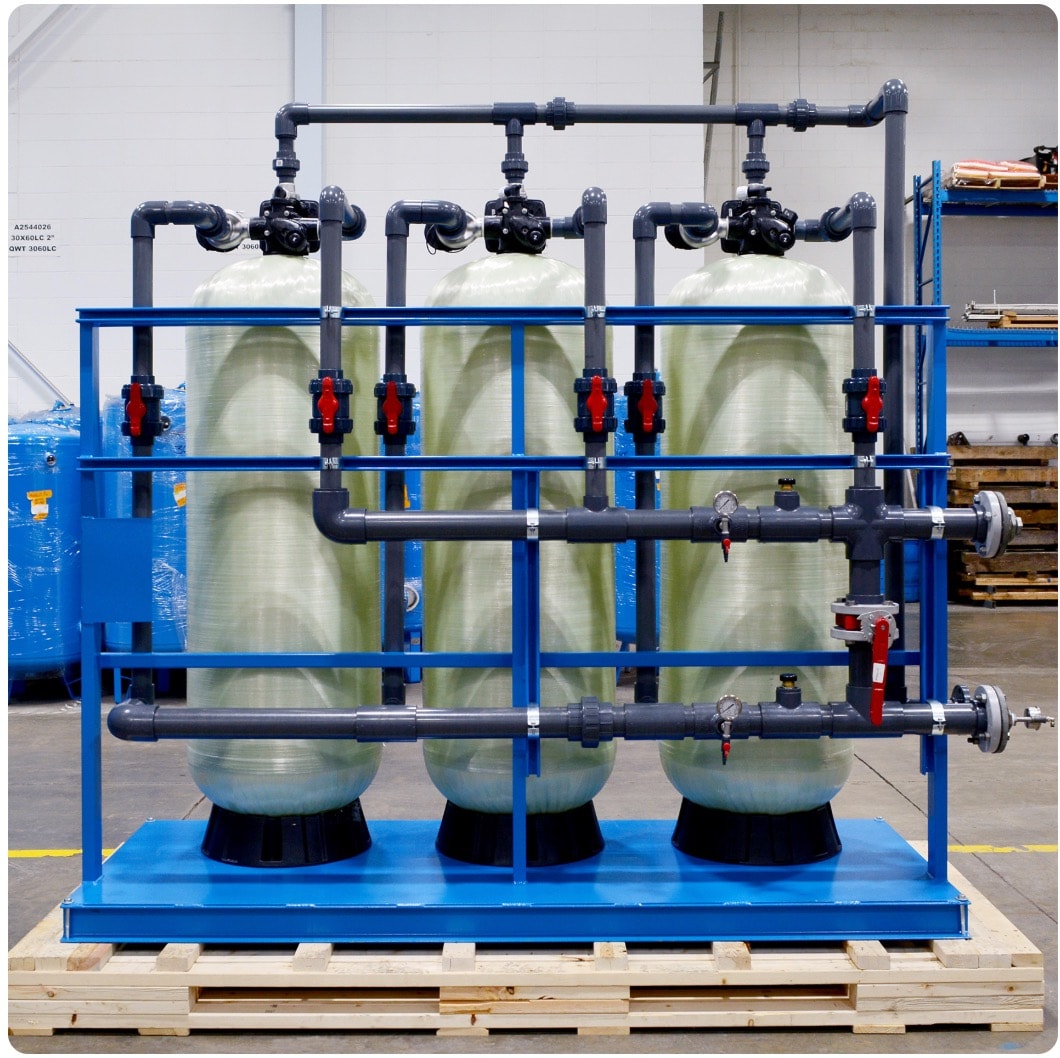
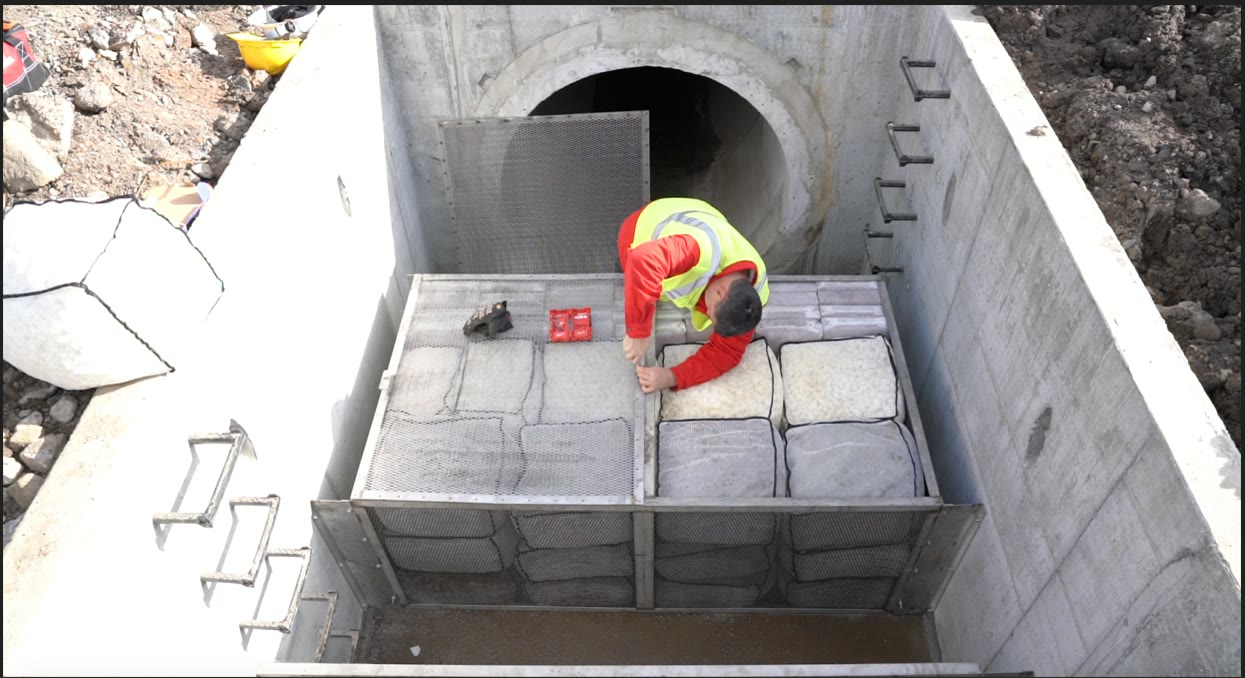
Where you need to polish the dissolved fraction, we make Smart Sponge® HM media, which targets dissolved metals along with phosphorus. It loads into your existing pressure vessels, skids, tanks and vaults as bulk media, and it supports wastewater polishing for discharge limits. Passive formats such as the Ultra Urban® Filter run without power, while Smart Skid systems use pumps. We run your water through the media in our Phoenix lab, then pilot it on site when it makes sense.
Why do facilities exceed orthophosphate limits?
The usual causes are orthophosphate added upstream, such as phosphate-based corrosion inhibitors in supply water, and variable influent loads.
Start by splitting a sample into its fractions to see which one drives the result. We start with what is in your water, how much flows and what your permit allows. For larger applications we add laboratory column testing on your own water, followed by pilot testing. If you want that done, schedule a site assessment.